Showing posts with label design. Show all posts

Thursday, 21 October 2010

Interieur - 21.10.10

International Design Biennale 'Interieur', Kortrijk, Belgium.

Renowed as one of the global events for contemporary design trends, the 22nd International Design Biennale 'Interieur' boasts designs that all followed the same theme 'The New World' - a subject matter offering a large variation in interpretation.

With great relevance to the project brief's we are currently following at KHM, it was nice to see objects in person as opposed to flat images on a computer screen. Getting up close and looking at the way in which designs had been manufactured and discussing issues such as ergonomics and aesthetics with the designers themselves was a great way to get a greater understanding of their purpose of design. After 6 hours of wandering and a bag full of design leaflets later, I left the Biennale feeling inspired and ready to get sketching as soon as got my hands on a sketch book.

One criticism though, in my opinion I felt that a lot of the designs were beginning to take on the same structures and at points I found myself wondering if we had already seen the design before. Without trying to be too clever the designs that were more successful were the ones that were simple but were effective.


Capturing the designs that insprired me.

Monday, 22 March 2010

Social Value Groups


Although I knew society was divided into different categories, I was not aware that there were so many different levels!

Being introduced to certain demographic classification models, a basic understanding into the topic allowed to me think about how I could apply these to my class projects. Currently undertaking a project at the moment of restoring a house for a book conservator called Emma Fraser, I have found myself constantly in this project trying to think like the client. One way in which I have been doing this is by using massive A0 sheets of paper to basically let my mind run riot! Whenever an idea or thought comes into my head, it gets jotted down. Trying to understand the needs of my client has allowed me to try and remodel this house entirely based on thoughts and assumptions I have taken away from the client myself. This method has been particularly useful to me but it is important to realise that if this had been any other client, I may have had to undergone my thought process a little differently…

My crazy thoughts.


Looking at the model and the different groups that there is I would probably place the client in the traditionalist category (although it is hard to place her in any one category). Taking on board this new knowledge, I feel I was successfully able to identify the client as this label myself. Trying to incorporate original features with objects she has inherited herself, Emma strikes me as the sort of people who likes a mix of old and new…open to new design but comfortable with the old.

If say for example my client fell into the category of an Innovator, the design would change considerably. The characteristics of this person would be completely different and so the needs from the client would not require certain aspects that Emma needed. Described as ‘risk takers’, ‘setting own targets’ and ‘seeking new things’, the house could possibly take on an entirely different form and could be unrecognisable with a modern and abstract design to suit them. Ignoring some of the original features and replacing these with new and exciting concepts would provide the house with a modern makeover.

With a client falling into the Disconnected group in the table, the design again would be entirely different. Characteristics would include ‘detached’ ‘resentful’ and ‘ever present now’ and I sincerely hope I never have a client like this! For me this would be such a challenge to overcome but I suppose breaking down the characteristics and trying to apply them in certain ways to the design would be a challenge worth overcoming as undoubtedly you would have to leave your comfort zone and pick up many new techniques in this process.

It is important as designers to take into consideration clients needs and gain an understanding into their personality and the affects that will have on have on design. By trying to categorise your client, you are trying to fit them into a field that has characteristics that will hopefully be able to help aid you in your design process.

Monday, 8 March 2010

Designing Out Crime

Something that particularly interests me is the way in which context, design and crime all intersect with one another so while reading through the Design Council website I came across a selection of case studies specialising in this topic.

Last semester when we had to undertake an investigation into a chapter from the Tipping Point, I chose the Power of Context, understanding some of the key ideas surrounding the topic. Talking about how things in our environment affect our behaviour due to social circumstances, upbringing, personality, etc I was interested in the way in which we are all subconsciously influenced. Looking at lots of different examples of crime prevention while researching this area, it was clear that only some designers were using their skills to address the problems, with some designers listening to people more than others. By designing something that was beneficial to them, many people are beginning to heed their advice.

Recently in one of our assignments I studied the power text can have on an individual - something that designers are using to publicise the dangers of crime to society. Images have a very powerful affect on us, proving we are very susceptible to some more than others. Graphic Designers are tapping into what we are most responsive to and are trying heighten the awareness we have of crime and some of the dangers attached to certain aspects of our everyday life, e.g. listening to our iPod. I am guilty of this, relying heavily on music I would hate to count the amount of hours a week I listen to it and although I am aware of crime I have never really thought that I would be a victim of it. Using images that we associate with crime RKCR/Y&R has use the colours black and yellow, triggering for most the image of the police tape, trying to warm naive people like me that crimes like this do occur.

RKCR/Y&R crime campaign

Using this image, I tried a small experiment removing the text to see whether the colours used were helpful. These posters are no doubt placed largely in public spaces, with most people only glimpsing at the poster and not really slowing to read what the it says, it is important that the message RKCR/Y&R are trying to portray is the message that we actually interpret. Sure enough the people that I asked were able to derive the message that the poster was about crime and iPod's, a test which RKCR/Y&R clearly would have had to carry out themselves.


Manilla Mac


Gaining inspiration from an advert Apple used to advertise the Apple MacBook Air, Manilla Mac created a laptop case that looked just like a document folder. When carrying this case suspicions wouldn't be aroused as to what was in the 'folder', disguising what could spur others on to commiting a crime. (Obviously you would need a laptop slim enough into fit the case!)

Although it is important to remember that we as designers won't be able to solve crime completely, we can all aim to try and help create spaces, services and products less vulnerable by creating innovative solutions.


With thanks:
http://img.engadget.com/common/images/3060000000053322.JPG?0.1716435483841945
http://www.designcouncil.org.uk/DCImages/Case%20Studies/Designing%20Out%20Crime/ManillaMac_M.jpg

Friday, 26 February 2010

Biomimicry

As designers we are constantly having to come up with design solutions, but sometimes these solutions have already been invented!

By looking more at the natural world we are surrounded by the design solutions. Consciously embedding these elements into design, we can create exciting new concepts by using old methods. Studying the way nature interacts with one another, scientists are now trying to encourage designers to take on board the results to help them solve problems sustainably.

Woodpecker hammer

Hitting a tree trunk with 25 pecks per second, the woodpecker is able to apply such pressure causing an outstanding level of impact. Using the woodpecker as inspiration, designers created a 'new' design that enabled the user to gain maximum power from the hammer and distribute the force from each blow.


Lotus: self - cleaning properties

With the ability to repel dirt, many companies are trying to create materials with similar properties to the Lotus leaf. Using only rain to clean, the microscopic bumps are mimicked in products such as paint, glass, etc reducing the need for detergents and labour.


'Shark Skin' Suit

Michael Phelps swimsuit was such a brilliant way of advertising Biomimicry. Presenting it on a highly publicised platform such as the Olympics allowed more people to gain an insight into the ideas surrounding the topic. Drawing inspiration from shark skin, designers were able to create a swimsuit that would allow the best conditions to swim faster - something essential to Phelp's profession. Scientists found small teeth located on shark skin, facing different positions along the body, to allow the most efficient path of water thus resulting in faster movement.


Biomimicry is now being incorporated into the structures of buildings, creating a more sustainable method than man made concepts that are sometimes not as successful.

Honeycomb housing

Theories and constructural laws are being used instead of drawing inspiration from specific species, allowing these natural laws that exist amongst some of the most interconnecting ecosystems to question the way things look and work.


Examples of Biomorphic Architecture


With thanks:
http://www.fastcompany.com/files/feature-129-biomimicry3LG.jpg
http://www.tfigblog.com/.a/6a01053647073b970c010536af1115970b-800wi
http://www.elephantjournal.com/wp-content/uploads/2008/10/honeycomb-housing-biomimicry.jpg
http://listicles.thelmagazine.com/wp-content/upload/michael-phelps-speedo1.png
http://s3files.core77.com/blog/images/evolo.jpg
http://www.inhabitat.com/wp-content/uploads/evolodysto-ed01.jpg

Saturday, 6 February 2010

Service Design in Practice

With David Townson

Beginning the lecture referring to an article that appeared in The Independent newspaper (Friday, 6th February 2009), “Too many design students, not enough jobs?” I was not exactly filled with confidence about the forthcoming lecture. With the shocking figure that on average most people will have 14 jobs before the age of 38, David made the point that our generation did not really ‘stick’ to any one job. Moving our skill set around, I personally did not see too much of an issue with this figure(and as I later discussed in my seminar that followed that day, the more jobs you have the more skills you are likely to learn). To get a job in the design field you have to be blooming good in your field or you have to have an alternative strategy to what you’ve learnt from DJCAD. I agree with the last point, I study Interior and Environmental Design but it does not mean that I will be employed in that part of the sector and what David asked us to try and do was to try and think quite broadly in what we would like to do and how we could use the skills that we are learning all the time in different parts of the industry.

The main point I learnt from yesterday’s lecture was that collaboration between the designer and the audience is very important. By involving people and talking them through the design process they are more likely to adopt the solution.
With examples from lift sharing with a small pocket of the community to helping a lightweight tubing company open up to a larger market, we were allowed to understand this point further.

An example: Lightweight Tubing Company
Already an accomplished company within the cycling field providing lightweight tubing for punctures, they felt a little unsatisfied. Wanting to increase their market, the company sought help from the Design Council. With there support, the company were able to redevelop elements within their current company and were able to connect to other industries. One of these advances, for example, was the light weight tubing being sold to some car manufacturer’s who used it to make lightweight cars.


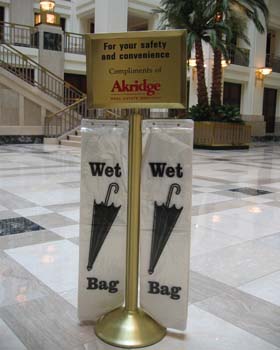
A problem that designers can have is trying to be too clever. Talking about a visit to Manchester, David talked about an example where a designer tried to solve a problem but in trying to do so they in turn created another.
Picture the scene… it’s miserable and grey outside and raining heavily. You’re running late for a meeting, your umbrella has just managed to hold up in the gale force winds and you share an uncanny resemblance with a drowned rat. You walk into a plush hotel entrance, umbrella leaving a trail of glistening rain drops. You’re struggling! You glance anxiously about and your heart skips a beat…a stand holding bags for your wet umbrella is there, brilliant! Not so fast. Sure your problem is primarily solved and you do not soak the whole place with the rainwater but what happens when you want to dispose of the bag…there is no bin on the stand. A prime example where designers have failed to solve the whole problem. The had covered safety, ergonomics and function but had forgotten all about disposal. In a world that is constantly changing it is important for designers to adapt to the new problems facing our society and try to solve these as best as they can, without creating unnecessary issues!

I really enjoyed this lecture and felt it was useful in getting us to think broadly as a designer and understanding fully the people that we are designing for. A point that David raised and I thought was relevant was do we as students get advice in career prospects from tutors. The whole lecture theatre echoed 'no' and it was quite nice for an outsider to tell us that even if we ourselves are a little unsure of where we want to end up, it pays to be open to every possibility including service design...possibly just trying for a sale...?

With thanks:
http://www.lobbysolutions.com/images/umbrella/IMG_3163.jpg
http://www.independent.co.uk/life-style/house-and-home/interiors/annie-deakin/too-many-design-students-not-enough-jobs-1547416.html

Wednesday, 27 January 2010

Maggie's

Balcony View


Not even ten minutes down the road from me, there is a sanctuary. A place where people can go for help and support through one of the most difficult times that you could think of.

Offering a service that is free of charge, Maggie's Fife is there to help anybody who needs support, whether it be you or those who look after someone with cancer. Offering a wide range of services to those who need it, Maggie's helps support those in a time of need.

Designed by Zaha Hadid, she was sensitive to the brief that she had been given and designed a space which was exciting and bold but also receptive to the circumstantial context it was being placed in. Located in the grounds adjacent to Victoria Hospital, it is protected by the natural environment surrounding the centre creating the sense of safety.

A perfect example where design can help.


Exterior View


Interior View


With thanks:
http://www.worldarchitecturenews.com/news_images/1000%20Zaha%20Maggie%20Exterior.jpg
http://www.worldarchitecturenews.com/news_images/1000%20Zaha%20Maggie%20balcony.jpg
http://www.worldarchitecturenews.com/news_images/1000%20Zaha%20Maggie%20interior.jpg
http://www.worldarchitecturenews.com/index.php?fuseaction=wanappln.projectview&upload_id=609

Monday, 25 January 2010

Tomato

Wired Magazine


One of my favourite foods. Now could it be one of my favourite design companies?

Reading "The Culture of Design" like the wee geek that I am I came across Tomato. Now I like reading but Juiller's accounts of the design world are a little monotonous for me unfortunately but I was soon left intrigued when he mentioned the London - based collective Tomato (Pity it came almost at the end of the chapter).

Not only did the random name grab me but the attitude that the company showed. I have a lot of respect for people who do not follow the herd. Who can be who they want without giving into the pressure of their surroundings.

Bearing this in mind it's little wonder that the title "Tomato" has no meaning behind it whatsoever! Stupid? I think not. I think it's quite genius. Some toff's will try and decipher the title and try to make up meaning behind it and think that they have cracked the title mystery only to discover that a common group of designers and a band have got the better of them.

"The name Tomato means nothing. You can put lots of meanings into it but there are none. A bit like our work really." Warwicker (2008:88)

Well maybe so but I quite like it. It's quirky and different and just what the design world needs to give it a shake up.


Z creation, elements from landscape research


Aerial Photography, Iceland


With thanks:
The Culture of Design, Guy Juiller
http://www.tomato.co.uk/

Saturday, 23 January 2010

Back to the real world

First week has just finished after coming back from the Christmas holidays and already there is so much to be done.

In class we have a new project called "Reduce. Reuse. Recycle."


This is a 12 week project aiming to educate us as designers of our disposable culture and how we can incorporate eco - friendly concepts into our designs without comprising the finished quality.


Broken into two parts, the first part of the brief focuses mainly on 'upcycling', a term used to describe something that has reached the end of it's service life and has been created into something with a higher value.
This first week has been a research week for us, working in groups on the specified subject we were given. Using this research gathered, the aim of the first part of this project is to create a 'book' that has been upcycled and portrays our thoughts about environmental design.

Environmental Design
What does this mean to you?

Starting with a big mind map to help get our 'creative juices flowing', we were able to shout out ideas as soon as they came into our heads. Splitting environmental design into three parts: materials, products and buildings, each member of the group focused on one area (two members focusing on the building section as we felt this was a rather extensive part to research).

With our research gathered, our next task was to create a method in which we could talk about our findings with the rest of the class. We decided to do this through Powerpoint, a little obvious but none the less still an effective way to convey our ideas.


Here are a few examples of the kind of things that we found:


I was able to create this page in the Powerpoint very quickly as I had referred to this building in an earlier post I made on my blog. This proposed building would be able to power itself and ten times over, rotating around a central axis.


A prototype capable of switching off all nonessential electrical equipment to save power.


These towers have been positioned so the turbines gain the maximum amount of energy from the wind.


This week we also had our first Design Studies lecture. Already there is lots of work to do and lots of reading. I decided to create a to do list with things that I wanted to do and found that I ran out of space...


Wednesday, 6 January 2010

Dress to impress?

Ask any girl if they bought a new dress over Christmas for a night out and most of them will tell you that they have, maybe even more than one! Well what about this dress?


Digna Kosse

With the weather the way it is just now imagine going out in one of these. Sure you'd have head's turning but not for all the right reasons. These dresses are more about making a statement rather than being more practical. I mean as a piece of art this is successful, celebrating the body and the feminine curves, but as for the design, not so much. Limiting the materials being used to construct these dresses, you can still sense the femininity but do you really need an almost invisible dress to do this.

I suppose one good idea behind these 'dresses' is that they are not wasteful. In a time when we are becoming more and more conscious of our choices and the impact that they will have on the environment, I don't think that there will be any problems with these dresses (except for the exposure!) The amount of material wasted due to the constant changes in fashion would be greatly reduced if a lot more of us wear clothes like this - although I'm not sure I'll ever wear one.


Digna Kosse


With thanks:
http://www.unovo.cn/home/attachment/200910/27/80_1256660382HMM8.jpg
http://www.dezeen.com/2009/10/20/minimal-dresses-by-digna-kosse/
http://static.dezeen.com/uploads/2009/10/dzn_3_dkosse_minimaldress_photo_lisaklappe2.jpg

Monday, 4 January 2010

B.F.G

B.F.G (Big, fancy giant!!)

A view to die for...


It is hard to imagine that buildings can keep on getting taller and taller but this is precisely what Giorgio Armani has done. Twice the size of the Empire State Building and 8 times the size of Big Ben, this colossal new hotel will certainly be a talking point for many years to come (or until someone else trumps it's size!)


Height Chart.


The astounding engineering is mind boggling! Not only setting a new record for the world's tallest building - thought to be about 818m high-, it also boasts the record for world's highest swimming pool (76th floor) and world's highest Mosque (158th floor).

So many issues would have to have been considered and it is hard to even try and consider how many problems would have arisen with this build. Claiming to be lightening and quake proof, the design would no doubt have to have been changed so much from Armani's original concept.

I suppose this is something quite important for designers to consider. At first glance an idea may seem amazing but put on a serious eye and nine times out of ten it is ridden with problems. This isn't a bad thing though. We are creative people and exercising our minds for constructive solutions will only help us become better designers. Back to reality though, I don't think I will have to consider problems ever on such a scale. Oh well, we can but dream!


A view from the top.
The Burj Dubai is thought to be visible from 60 miles away.


With thanks:
http://www.metro.co.uk/news/807667-burj-dubai-a-160-storey-view-with-a-lot-of-rooms
http://www.premiumposts.com/wp-content/uploads/2007/08/BurjDubaiHeight.jpg
http://farm1.static.flickr.com/128/405790364_2b03a6000d.jpg

Thursday, 3 December 2009

Social Networking

We've all heard of Facebook, Bebo, Twitter, etc and we all know how great they are for keeping in touch with old friends, looking at photos and posting what you thinking...but would you go as far as posting how your feeling at your wedding?

This is exactly what an American software developer did!
During his ceremony Dana Hanna managed to update his facebook status and tweet "Standing at the alter with @ TracyPage where just a second ago, she became my wife! Gotta go, time to kiss my bride." Ridiculous?

Hailed as the 'social utility' this sort of thing is not uncommon and more and more people are posting strange status'- "hopes this Halloween, he doesn't end up with a bag full of restraining orders again." (Just maybe not as bad as posting your status at your wedding!)

The amount of media attention this couple is receiving in America is unbelievable and they are already on Fox Channel and there is something telling me that this was the intention behind the posts, but is it right? I mean your wedding day is supposed to be the most exciting day of your life and would you really want yours to be publisied for some cheap publicity?


Social networking does have its serious side though and some people now are using these websites as tools to help them design art pieces.


Here are some of the examples that I came across:


With thanks:

http://facebookstatus.blogspot.com/
http://www.facebook.com/pages/Chloe-And-Keiths-Wedding/156152425347
http://www.notempire.com/images/uploads/mdfilmfestival.jpg
http://images.quickblogcast.com/66290-58106/theescalationofcommittmentnnsurfart.jpg
http://s.wsj.net/public/resources/images/OB-DH529_Twitte_DV_20090313230907.jpg
http://www.youtube.com/watch?v=QWoiuXCE9Xo

Wednesday, 11 November 2009

Context and Design

Recently I have gained a deeper understanding of just how much context effects design... Gaining information for my last task in the design studies assignments I began to truly understand how different environments provide different reactions to art and design. An example of this would be graffiti. Some people see this as a piece of art while others see it as vandalism, but why is this?

Context. Depending on many factors, e.g. where you were raised, what was happening in the environment around you, what you were interested in as a child, etc, these would all play part in how you respond to things. Personally for me I think graffiti is art, purely because it is not always just a spur of the moment thing. Some 'designers' think about where to place their graffiti for the best response and how to layer things so that some parts jump out and capture the viewer. Graffiti gets a better response in some areas than others so it is important for this to be taken into consideration. Graffiti is a platform for people to raise issues important to them so we as designers have to be careful about which we show case our design as some people may not respond how we want them to...